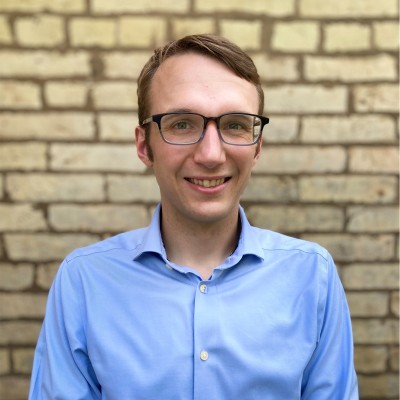
Postdoctoral Research Associate · Argonne National Laboratory
Coastal flooding • Tides & storm surge • Climate risk • Numerical modeling
Image: Hurricane Lee, Sept. 12, 2023 — NASA Earth Observatory / Lauren Dauphin, GOES-16 imagery courtesy of NOAA/NESDIS
I am a postdoctoral research associate in the Environmental Science Division at Argonne National Laboratory, where I study coastal flooding risk to critical infrastructure under present and future climate scenarios. My work spans long-term flood risk assessment, hydrodynamic and wave modeling, coupled ocean model development, and large-ensemble tropical cyclone simulations on high-performance computers.
I completed my Ph.D. in Civil Engineering at the University of Notre Dame in 2023, where my dissertation examined nonlinear interactions between barotropic and baroclinic processes in a global tide and storm surge model. I remain deeply interested in improving the accuracy and efficiency of physics-based coastal flood forecasting systems from regional to global scales.
Power plants, hospitals, and transportation networks in coastal areas face growing risk from storm-driven flooding. Without accurate estimates of that risk, the damages from a storm can last far beyond the end of the event. To forecast risk both in the present day and at mid-century, I combine large-ensemble tropical cyclone simulations with physics-based hydrodynamic models to estimate how that risk will evolve over the coming decades.
Global climate models are powerful tools for understanding long-term change, but their coarse resolution misses the fine-scale dynamics that drive coastal flooding. Using novel remapping and numerical techniques, I am developing methods to capture high-resolution (∼100 m) coastal inundation within traditionally coarse (∼10 km) ocean models — enabling seamless simulation of flood risk within global climate projections.
Accurate tides are the foundation of any coastal flood forecast. In my dissertation work I used optimization techniques and coupling to a global ocean circulation model to more faithfully capture tides in a global barotropic tide model. By better representing tides and longer-term sea-level changes driven by temperature and salinity, we can more accurately estimate the combined effects of tides and wind-driven surge during storm events.
Dissertation: "Understanding Nonlinear Interactions between Barotropic and Baroclinic Processes in a Global Tide and Storm Surge Model"
Advisor: Joannes Westerink, Ph.D.
University of Notre Dame
International Workshop on Modeling the Ocean
University of Notre Dame Student Chapter
I'm always happy to discuss research, collaborations, or opportunities.